UAE Market · UAE Real Estate (General)
UAE Real Estate: Guide
The seven emirates, where you can own, ownership models, sectors, the tax landscape and how to invest with your eyes open.
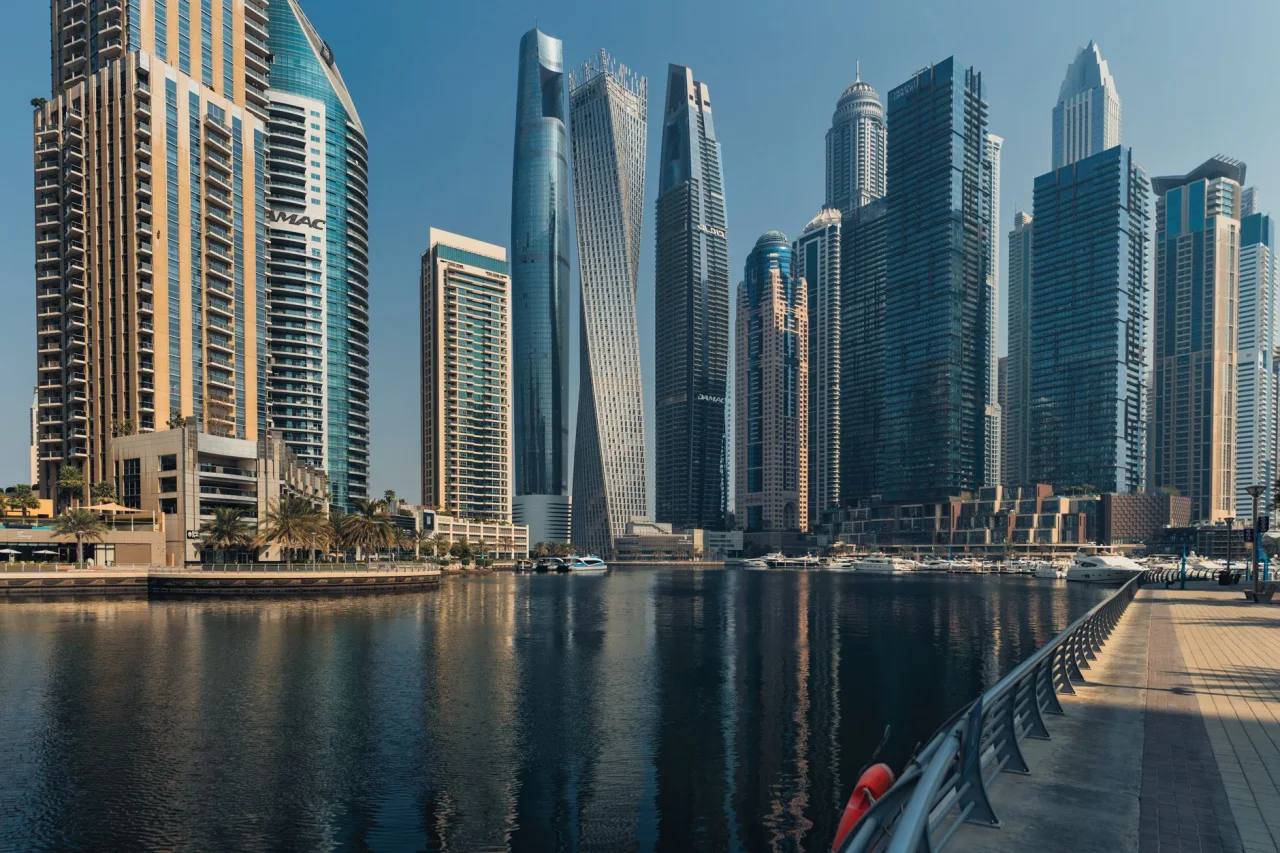
The United Arab Emirates has grown from a regional property market into a destination for global real estate capital, drawing homebuyers, tenants and investors from every continent. This complete guide gives the country-wide picture in 2026: the seven emirates and where you can own, why the market attracts foreign money, the main property sectors, the tax and cost landscape, and how to invest with your eyes open. Treat it as general information, not personalised financial or legal advice.
The short version
- The UAE is a federation of seven emirates, with most foreign property activity in Dubai and Abu Dhabi and growing interest in Sharjah, Ajman and Ras Al Khaimah.
- Foreigners can own freehold in designated Dubai areas and in Abu Dhabi's investment zones, with other emirates offering a mix of freehold and usufruct.
- Key attractions are no annual residential property tax, relatively high yields, a wide price range, and a residency-by-investment route.
- Prices, rents and yields vary widely by emirate and community, so confirm live figures with a RERA-registered agent or on the official portals before committing.
Why UAE real estate attracts global buyers
The UAE combines a fast-growing economy, a central location between Europe and Asia, and a regulatory system that has matured considerably since freehold ownership opened to non-citizens. As the encyclopaedic overview notes, liberalisation allowing non-citizens to buy freehold land triggered a major boom in construction and real estate, and the market that followed the 2008 downturn came with tighter regulation and stronger oversight.
The practical appeal for buyers today is a mix of factors: no annual property tax on residential homes, relatively high rental yields compared with many mature global cities, a wide range of price points from compact studios to beachfront villas, and a residency pathway tied to property ownership. None of that removes risk, which is why this guide frames numbers as ranges and points you to official sources for anything affecting your money.
The seven emirates and where you can own
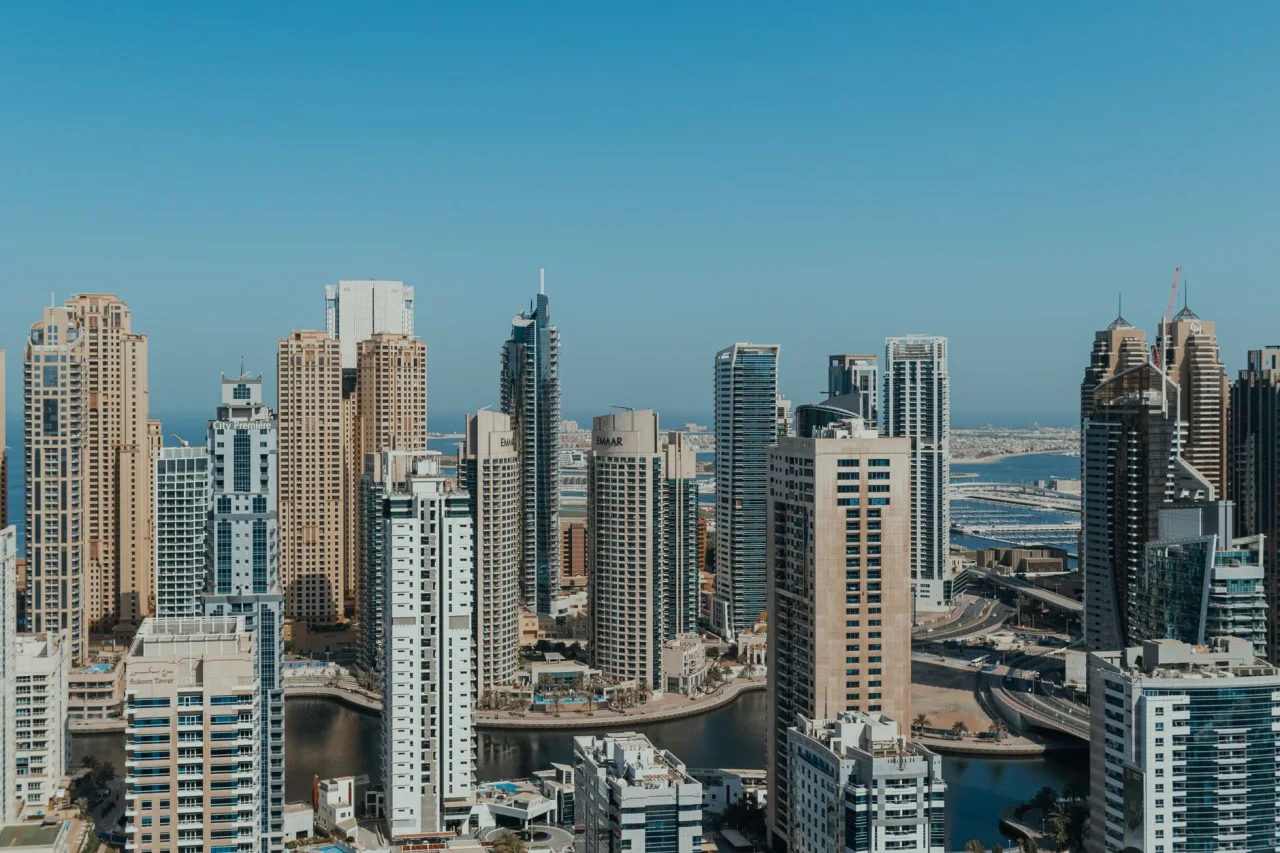
The UAE is a federation of seven emirates. Ownership rules differ by emirate, so the first question is always not just what to buy but where you are legally allowed to own it. The official UAE government summary of expatriates buying property in the UAE is the authoritative starting point.
- Dubai: foreigners may acquire freehold ownership in designated areas without restriction, or hold usufruct and leasehold rights up to 99 years, with title deeds from the Dubai Land Department. See our guide to Dubai real estate.
- Abu Dhabi: expatriates can own within investment zones such as Yas Island, Saadiyat Island, Al Reem Island and Al Raha Beach, through freehold, usufruct and long lease. See our overview of apartments in Abu Dhabi.
- Other emirates: Sharjah generally grants usufruct rather than outright ownership to foreign nationals in approved areas, while Ajman and Ras Al Khaimah offer freehold in selected projects. Always verify the designation of a specific plot.
Ownership models: freehold, leasehold, usufruct
Understanding the title type is essential because it defines exactly what you own and for how long.
- Freehold: you own the property and the land outright, with the right to sell, lease or pass it on. This is the model most foreign buyers seek in Dubai's designated areas and Abu Dhabi's investment zones.
- Leasehold: you hold rights to use the property for a fixed term, often up to 99 years, after which rights revert to the freeholder.
- Usufruct: a long-term right to use and benefit from a property without owning the land, common in some Abu Dhabi and Sharjah arrangements.
Because the same community can offer different title types across its plots, never assume. Ask for the title deed details in writing and confirm them with the relevant land department before you sign.
The main property sectors

UAE real estate spans several sectors, each with a different risk and return profile:
- Residential ready property: completed apartments, townhouses and villas you can occupy or rent immediately. The most straightforward entry for end users.
- Off-plan: property bought from the developer during construction on a staged payment plan, with buyer funds protected in escrow. Lower entry prices but completion and market-timing risk.
- Commercial and hospitality: offices, retail and hotel-linked units, tied closely to the tourism sector that is one of the UAE's biggest non-oil revenue sources.
For most private buyers the choice is between ready and off-plan residential. If you are starting a purchase, our guide to buying property in Dubai and our broader UAE real estate guide walk through the practical steps.
Tip: verify the title before the deposit
A listing that says freehold is a marketing claim until you see it on an official title deed. Confirm the ownership type, service charges and any developer restrictions with a RERA-registered agent and the relevant land department before you pay a deposit.
Taxes and costs
The UAE is attractive partly because there is no annual property tax on residential homes and no personal income tax on rental income for individuals. That does not mean buying is free of cost. In Dubai the largest single transaction cost is the Dubai Land Department transfer fee of 4 percent of the purchase price, on top of registration, agency and mortgage fees. Abu Dhabi and other emirates apply their own registration and transfer charges. VAT applies to some fees and to commercial property, though residential sales and leases are generally treated differently.
Ongoing costs include annual service charges set per community and tower. These vary widely and are a permanent running cost, so factor them into any yield calculation. Confirm current fees and charges with a RERA-registered agent or on the official portals.
Residency and investing
Property ownership can unlock long-term residency. According to the official UAE government page on the Golden Visa, one qualifying route is property ownership at a minimum value of AED 2 million. Criteria and durations can change, so verify the current rules on the official portal before planning a purchase around a visa. Our Golden Visa guide explains the process.
As an investment, UAE real estate is valued for rental yields and capital growth potential, but returns are never guaranteed and depend on emirate, location, timing, service charges and financing costs. Our guide to investing in Dubai sets out the returns and risks honestly.
Understanding the market cycle
UAE real estate has always moved in cycles. The market boomed after freehold liberalisation, corrected sharply in the 2008 global financial crisis, and recovered under tighter regulation and oversight. That history is a reminder that prices can fall as well as rise, that off-plan supply pipelines can shift the balance between buyers and sellers, and that timing and location matter as much as the headline yield.
For that reason, treat any single price, rent or yield figure as a snapshot, not a promise. Build a margin of safety into your budget, do not overstretch on financing, and take independent advice for significant decisions.
Note: general information, not advice
Nothing here is personalised financial, legal or tax advice. Ownership rules, fees, visa thresholds and market conditions can change and vary by emirate. Before committing, engage a RERA-registered agent, a conveyancer where relevant, and verify all figures and rules on official government channels.
Frequently asked questions
Can foreigners own real estate anywhere in the UAE?
No, not anywhere. Foreigners can own freehold in Dubai's designated areas and in Abu Dhabi's investment zones, and freehold or usufruct in selected areas of other emirates such as Sharjah, Ajman and Ras Al Khaimah. Outside these areas ownership is restricted. Always confirm the exact designation and title type for a specific property before you buy.
Is there any property tax in the UAE?
There is no annual property tax on residential homes and no personal income tax on rental income for individuals. However, buyers pay transaction costs such as the Dubai Land Department transfer fee of 4 percent in Dubai, plus registration and agency fees, and owners pay ongoing service charges. VAT applies to some fees and to commercial property. Confirm current charges on the official portals.
Does buying UAE property give residency?
It can. Owning UAE property valued at AED 2 million or more is one qualifying route for the long-term Golden Visa under current rules. Thresholds and conditions can change, so verify the latest criteria on the official UAE government portal before relying on a visa outcome.
Which emirate is best for property investment?
There is no single best emirate. Dubai offers the deepest, most liquid market and the widest freehold choice, Abu Dhabi offers investment zones with a more measured pace, and the northern emirates can offer lower entry prices. The right choice depends on your budget, goals and risk tolerance. Compare yields net of service charges, and never rely on a headline gross figure.
Are the prices and yields in this guide exact?
No. All figures here are general ranges for context only. Actual prices, rents, service charges, fees and yields vary by emirate, community, tower, floor, view and market conditions. Always confirm live figures with a RERA-registered agent or on the official land department and property portals before making a financial decision.
More guides on UAE Real Estate (General)
Have a question or a topic to suggest?
We read every message. Tell us what you would like to see next on the blog.
Get in touchYou may also like

Real Estate: Complete UAE Guide (2026)
How the UAE property market works in 2026: the emirates and their zones, freehold versus leasehold, real buying and renting costs, and the residency-by-investment route, framed as general guidance with official sources.

Dubai Real Estate Guide
The hub guide to Dubai property: market structure, who can own where, costs and fees, renting versus buying, investing and the regulations that protect you.

Investing in Dubai: Returns and Risks
How property returns really work in Dubai: rental yield versus capital growth, indicative yields by segment, the risks to price in, and how to verify figures before you invest in 2026.