UAE Market Guide · UAE Real Estate (General)
Real Estate: Complete UAE Guide (2026)
Freehold rules, fees, the buying and renting process, and the Golden Visa, explained clearly for buyers, tenants and investors across the UAE.

Real estate in the United Arab Emirates draws buyers, tenants and investors from around the world, thanks to freehold ownership for foreigners, no annual property tax, and a residence-by-investment route. This complete guide explains how the UAE market works in 2026: the emirates and their zones, ownership types, the real costs, the buying and renting process, and the regulations that protect you. Treat it as general information, not personalised financial or legal advice.
The short version
- Foreigners can own freehold property in designated areas of Dubai, and in specified investment zones in Abu Dhabi, under models that include full ownership deeds, usufruct and long leaseholds.
- The single biggest transaction cost in Dubai is the Dubai Land Department transfer fee of 4 percent of the purchase price, on top of agency and registration charges.
- Owning UAE property valued at AED 2 million or more can qualify you for a long-term Golden Visa, subject to the current official criteria.
- Prices, rents and service charges vary widely by emirate, community, tower and view, so always confirm live figures with a RERA-registered agent or the official portals before committing.
Why the UAE property market attracts global buyers
The UAE combines a fast-growing economy, a central location between Europe and Asia, and a regulatory system that has matured considerably since freehold ownership was opened to non-citizens. As the encyclopaedic overview of real estate in the United Arab Emirates notes, liberalisation that allowed non-citizens to buy freehold land triggered a major property boom, and the market that followed the 2008 downturn came with tighter regulation and stronger oversight.
For buyers today, the practical appeal is a mix of factors: no annual property tax on residential homes, relatively high rental yields compared with many mature global cities, a wide range of price points from compact studios to beachfront villas, and a residency pathway tied to property ownership. None of that removes risk, and this guide is careful to frame numbers as ranges and to point you to official sources for anything that affects your money.
The seven emirates and where you can own
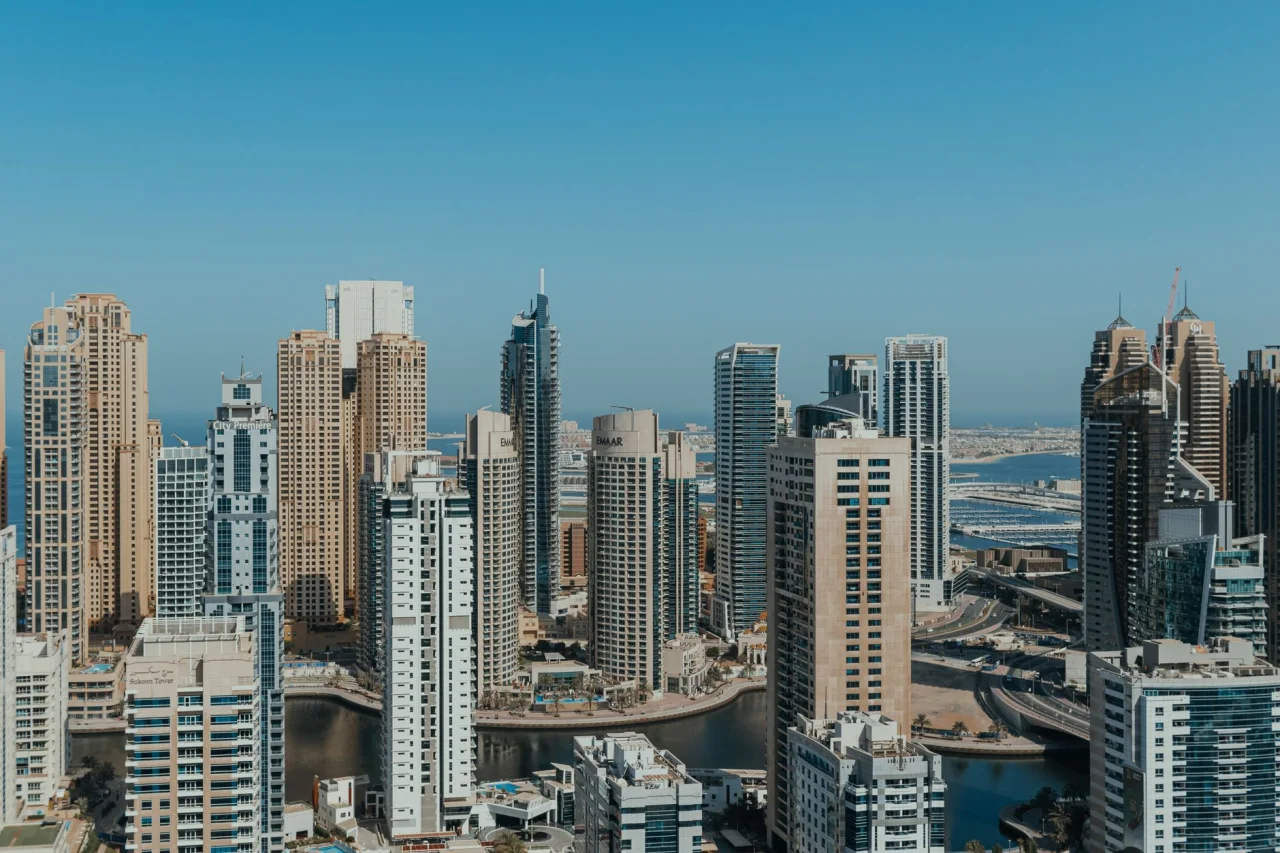
The UAE is a federation of seven emirates. Most foreign property activity concentrates in Dubai and Abu Dhabi, with growing interest in Sharjah, Ajman and Ras Al Khaimah. Ownership rules differ by emirate, so the first question is always not just what to buy but where you are legally allowed to own it.
- Dubai: foreigners may acquire freehold ownership in designated areas without restriction, or usufruct and leasehold rights for terms up to 99 years, with title deeds issued by the Dubai Land Department.
- Abu Dhabi: expatriates can own within specified investment zones such as Yas Island and Saadiyat Island, through models that include ownership deeds for units for up to 99 years, Musataha contracts, usufruct rights and long-term leases of at least 25 years.
- Other emirates: Sharjah generally grants usufruct rather than outright ownership to foreign nationals in approved areas, while Ajman and Ras Al Khaimah offer freehold in selected projects. Always verify the exact designation of a specific plot.
The official UAE government summary of expatriates buying property in the UAE is the authoritative starting point for these rules, and it is the source we rely on above.
Freehold, leasehold and usufruct explained
Understanding the title type is essential because it defines exactly what you own and for how long.
- Freehold: you own the property and the land it sits on outright, with the right to sell, lease or pass it on. This is the model most foreign buyers seek in Dubai's designated areas.
- Leasehold: you hold rights to use the property for a fixed term, often up to 99 years, after which rights revert to the freeholder.
- Usufruct: a long-term right to use and benefit from a property without owning the land, common in some Abu Dhabi and Sharjah arrangements.
Because the same community can offer different title types across its plots, never assume. Ask for the title deed details in writing and confirm them with the relevant land department before you sign anything.
Tip: verify the title before the deposit
A listing that says freehold is a marketing claim until you see it on an official title deed. Confirm the ownership type, service charges and any developer restrictions with a RERA-registered agent and the Dubai Land Department or Abu Dhabi authorities before you pay a deposit.
What buying really costs in 2026

The headline price is only part of the story. In Dubai the largest single cost is the Dubai Land Department transfer fee, which is 4 percent of the purchase price. By law it is meant to be shared between buyer and seller, but in practice buyers commonly pay the full amount, so budget for it. On top of that you should expect:
- A property registration fee (a fixed administrative charge that varies by property value) plus VAT on that fee.
- Agency commission, commonly around 2 percent of the purchase price plus VAT.
- A trustee or transfer office fee, and mortgage registration costs if you borrow.
- Ongoing annual service charges set per community and tower, which fund maintenance and amenities.
Property prices and service charges vary enormously by emirate, community, tower, floor and view, and market conditions move. For any specific home, confirm current figures with a RERA-registered agent or on the Dubai Land Department and Dubai REST portals rather than relying on rounded estimates. If you are pricing a specific segment, our guide to buying an apartment in Dubai walks through benchmark ranges and fees in more detail.
The buying process step by step
Whether you buy ready or off-plan, the process follows a recognisable path. A simplified version looks like this:
- Set a realistic budget that includes fees, not just the sticker price, and get mortgage pre-approval if you are borrowing.
- Search verified listings and shortlist. A good starting point is a trusted portal, and our guide to finding property in Dubai explains how to filter and verify what you find.
- Agree terms and sign a Memorandum of Understanding, typically with a deposit held by the agent or trustee.
- Obtain a No Objection Certificate from the developer where required, confirming service charges are clear.
- Complete the transfer at a registration trustee office, pay the fees, and receive the title deed.
For off-plan purchases, payments follow a construction-linked plan and buyer funds are protected through a regulated escrow account. Off-plan can offer lower entry prices and flexible instalments but carries completion and market timing risk, so read the sales contract and developer track record carefully. Our overview of buying off-plan in Dubai covers those trade-offs.
Renting: contracts, Ejari and the rental index
Most residents rent before they buy. Tenancy in Dubai is registered through the Ejari system, which formalises the contract and is required for utilities and visas. The Dubai Land Department and its Dubai REST app handle registration, renewal and rental dispute services. Rent increases are governed by a published rental index rather than set freely, which gives tenants a reference point at renewal.
Typical rents span a very wide range by area and property type, from compact studios in emerging communities to family villas on the coast. For live figures and neighbourhood comparisons, see our guides to apartments for rent in Dubai and studios for rent in Dubai, and always confirm the current asking rent with the landlord or agent.
Residency, Golden Visa and investing
Property ownership can unlock long-term residency. According to the official UAE government page on the Golden Visa, one qualifying route is property ownership at a minimum value of AED 2 million, with a real-estate-based residency of five years. Criteria and durations can change, so verify the current rules on the official portal before you plan a purchase around a visa.
As an investment, UAE real estate is valued for rental yields and capital growth potential, but returns are never guaranteed and depend on location, timing, service charges and financing costs. Our guide to investing in Dubai sets out the returns and risks honestly. If you are weighing a home rather than an investment, our overview of homes across the UAE compares apartments, townhouses and villas.
Frequently asked questions
Can foreigners own property in the UAE?
Yes, within limits set by each emirate. In Dubai, foreigners may own freehold property in designated areas without restriction, or hold usufruct and leasehold rights for up to 99 years. In Abu Dhabi, expatriates can own within specified investment zones through models that include 99-year ownership deeds, Musataha, usufruct and long leases. Confirm the exact rights on the title deed for any specific property.
How much are the fees when buying property in Dubai?
The largest cost is the Dubai Land Department transfer fee of 4 percent of the purchase price, which buyers commonly pay in full. On top of that, budget for a property registration fee plus VAT, agency commission of around 2 percent plus VAT, trustee and mortgage registration costs, and ongoing annual service charges. Confirm exact amounts for your purchase with a RERA-registered agent.
Does buying property give me UAE residency?
It can. Owning UAE property valued at AED 2 million or more is one qualifying route for the long-term Golden Visa, with a five-year real-estate residency under current rules. Thresholds and conditions can change, so verify the latest criteria on the official UAE government portal before relying on a visa outcome.
Is it better to buy off-plan or ready property?
Neither is universally better. Off-plan can offer lower entry prices and staged payment plans with buyer funds protected in escrow, but carries completion and market-timing risk. Ready property lets you see exactly what you get and start earning rent immediately, usually at a higher upfront price. Match the choice to your budget, timeline and risk tolerance.
Are property prices and rents in this guide exact?
No. All figures here are general ranges for context only. Actual prices, rents, service charges and fees vary by emirate, community, tower, floor, view and market conditions. Always confirm live figures with a RERA-registered agent or on the Dubai Land Department and Dubai REST portals before making a financial decision.
More guides on UAE Real Estate (General)
Have a question or a topic to suggest?
We read every message. Tell us what you would like to see next on the blog.
Get in touchYou may also like

Property Finder Dubai: UAE Guide 2026
How online property portals work in Dubai and the wider UAE: searching and filtering effectively, reading listings critically, verifying agents and permits, and cross-checking asking prices against official transaction data.

Buy Apartment in Dubai: 2026 Guide
A 2026 buyer's guide to buying an apartment in Dubai: where expats can own freehold, how prices are set, the fees to budget for including the 4% DLD transfer fee, off-plan versus ready, and the step-by-step process.

Investing in Dubai: Returns and Risks
How property returns really work in Dubai: rental yield versus capital growth, indicative yields by segment, the risks to price in, and how to verify figures before you invest in 2026.