Heritage & Property
Qasr Al Hosn: Visitor Guide
The story of Abu Dhabi's oldest fort, how to visit, and what a central landmark location really does for nearby rents and values.

Qasr Al Hosn is the oldest stone building in Abu Dhabi and the historic heart of the city, a fort that grew from an eighteenth century watchtower into the seat of the emirate's rulers. This guide covers what it is, how to visit, and, for property minded readers, what sitting near central Abu Dhabi's landmarks can mean for nearby rents and values. It is general information, not personalised financial or legal advice.
The short version
- Qasr Al Hosn is Abu Dhabi's oldest stone building, dating from a 1761 watchtower and later expanded into a fort and palace.
- After a decade long restoration it reopened as a museum in 2018, part of the wider Al Hosn cultural site.
- Its location anchors central Abu Dhabi, an established, well connected area with a mix of apartments and civic amenities.
- Proximity to landmarks supports demand, but rents and values depend on the specific building, so verify with a licensed agent.
What Qasr Al Hosn is
Qasr Al Hosn is a historic fort in the centre of Abu Dhabi and is recognised as the oldest stone building in the city. Its origins trace to a watchtower built in 1761 to guard the settlement's precious freshwater well. In 1793 the structure was expanded into a fort by the ruler Shakhbut bin Dhiyab Al Nahyan, and it went on to serve as the home of Abu Dhabi's ruling family and the seat of government for much of the following two centuries. You can read the full history on the Qasr Al Hosn encyclopaedia entry.
The building was extended again in the late 1930s using early oil licence revenues, and it ceased to be the ruler's palace and seat of government in the 1960s. After a major, decade long restoration, Qasr Al Hosn reopened to the public as a museum in 2018, displaying artefacts, photographs and objects that tell the story of the emirate's development.
Visiting Qasr Al Hosn

Today Qasr Al Hosn operates as a museum and cultural destination on Sheikh Zayed the First Street in central Abu Dhabi. According to the official site, it is generally open through the week with a later start on Fridays, and tickets can be booked online. Because opening hours and ticket prices can change with seasons and events, confirm the current details on the official Qasr Al Hosn website before you go.
The wider Al Hosn site includes more than the fort. It brings together the historic building, the Cultural Foundation, and the House of Artisans, where traditional Emirati crafts such as Sadu weaving are demonstrated. An annual cultural festival adds performances and heritage activities, making the precinct a focal point for Emirati culture in the capital.
Tip: pair your visit with the wider cultural map
Abu Dhabi's cultural attractions are spread across the city, from the central Al Hosn precinct to the museum district on Saadiyat Island. If you are exploring for lifestyle or relocation reasons, visit a few in one trip to get a feel for which part of the city fits you before you commit to an area.
The neighbourhood around Qasr Al Hosn
Qasr Al Hosn sits in the dense central core of Abu Dhabi island, an established district of apartment towers, offices, government buildings and retail, within easy reach of the Corniche waterfront. This is one of the most walkable and centrally connected parts of the capital, which is exactly what many renters and buyers look for. The housing stock here leans toward apartments rather than villas, reflecting the urban character of the centre.
For anyone weighing this area against the newer developments, our guide to apartments for rent in Abu Dhabi compares central and island options, and our Reem Island area guide shows how a modern, planned island community differs from the historic centre.
What proximity to landmarks means for property

Being near a major cultural landmark and the central business core can support property demand, but it is worth being precise about how. In practice, the effects tend to be:
- Central location value: homes near the core benefit from walkability, established amenities and strong transport links, which underpins steady tenant demand.
- Lifestyle appeal: a nearby heritage site, cultural venues and the Corniche add to an area's desirability for residents.
- Stability over novelty: established central districts often trade on consistent demand rather than the rapid swings of brand new launches.
What proximity does not do is set a fixed price uplift. A landmark down the road does not add a specific number to any given apartment. Rents and values are driven far more by the building itself, its condition, floor, view and service charge, than by the presence of a nearby attraction. Treat "near Qasr Al Hosn" as a lifestyle and location positive, not a valuation formula.
Renting or buying in central Abu Dhabi
If the central location appeals, approach the numbers carefully. For renters, check asking rents against current listings and the local rental guidance, register the tenancy through the proper channels, and clarify what the service charge or maintenance covers. For buyers, note that ownership rules and eligible investment zones in Abu Dhabi are governed by the local authorities, so confirm whether a specific building is available on the ownership terms you need before proceeding.
Because Abu Dhabi's foreign ownership and investment zone rules can change, verify current eligibility and any property linked residency thresholds with the relevant Abu Dhabi authority or a licensed agent rather than assuming. This is general information and not a substitute for advice from a licensed professional.
Getting there and making the most of a visit
Qasr Al Hosn is easy to reach within the central island, sitting on Sheikh Zayed the First Street with parking and taxis readily available, and it is a short distance from the Corniche. A visit rewards a little planning: allow time for the fort and its museum displays, and if the schedule allows, look in on the House of Artisans to see traditional crafts being demonstrated. The site also hosts an annual cultural festival that turns the precinct into a lively showcase of Emirati heritage for a period each year.
If you are exploring the area as a prospective resident rather than a tourist, treat the visit as neighbourhood research. Note how walkable the streets feel, what shops and cafes are within reach, and how the daytime and evening character differs. These lived details matter far more to your satisfaction as a resident than the presence of the landmark itself.
Comparing central Abu Dhabi with newer districts
Central Abu Dhabi, anchored by Qasr Al Hosn, offers an established, walkable, apartment led environment with mature amenities. That is a different proposition from the newer planned communities on the surrounding islands, which offer modern towers, waterfront masterplans and, in some cases, ownership options aimed at overseas buyers. Neither is objectively better: the centre trades on convenience and heritage, while the newer districts trade on modern facilities and space. Your choice should follow your commute, budget and lifestyle, and in every case you should judge the individual building rather than the district's reputation.
Qasr Al Hosn and Abu Dhabi's wider landmark map
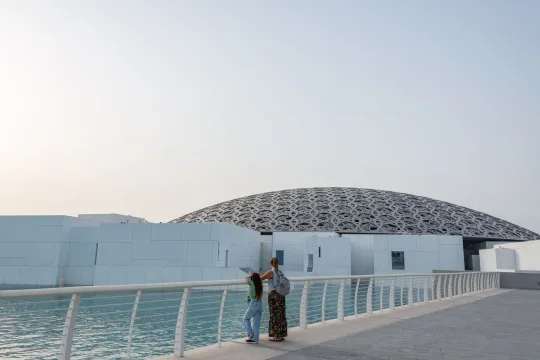
Qasr Al Hosn is the historic anchor of the capital, but it is one of several landmarks shaping where people want to live. The museum district on Saadiyat Island is the modern counterpart, and our guide to what the Louvre Abu Dhabi means for nearby property covers how a flagship cultural venue interacts with a residential area. If you are researching Qasr Al Hosn specifically, our companion piece on the Qasr Al Hosn fort looks at the site from a slightly different angle.
Before you rent or buy nearby
- Judge the specific building, not just the postcode or the landmark.
- Check the exact unit's condition, floor, view and service charge.
- Confirm ownership eligibility for the building with an Abu Dhabi licensed agent.
- Verify current opening hours and tickets on the official Qasr Al Hosn site before visiting.
Frequently asked questions
What is Qasr Al Hosn?
Qasr Al Hosn is the oldest stone building in Abu Dhabi. It began as a watchtower built in 1761 to protect the settlement's freshwater well, was expanded into a fort in 1793, and later served as the ruler's palace and seat of government before reopening as a museum in 2018.
Can you visit Qasr Al Hosn?
Yes. It operates as a museum and cultural site on Sheikh Zayed the First Street in central Abu Dhabi, with tickets available online. Opening hours and prices can change, so confirm the current details on the official Qasr Al Hosn website before visiting.
What is around Qasr Al Hosn?
It sits in the dense central core of Abu Dhabi island, close to the Corniche, surrounded by apartment towers, offices, government buildings and retail. The area is walkable and well connected, with mostly apartment style housing.
Does being near Qasr Al Hosn increase property value?
A central location and nearby landmarks support demand and lifestyle appeal, but they do not add a fixed amount to any apartment. Rents and values depend far more on the specific building, its condition, floor and service charge, so assess each unit on its own facts.
Can foreigners buy property near Qasr Al Hosn?
Foreign ownership in Abu Dhabi depends on designated investment zones and current rules, which can change. Confirm whether a specific building is available on the ownership terms you need with the relevant Abu Dhabi authority or a licensed agent before proceeding.
More guides on Landmarks & Lifestyle
Have a question or a topic to suggest?
We read every message. Tell us what you would like to see next on the blog.
Get in touchYou may also like

Qasr Al Hosn Fort: Visitor Guide
A visitor guide to Qasr Al Hosn, Abu Dhabi's oldest stone building and now a museum, with a grounded look at what proximity to a landmark means for nearby rents and property values.
Louvre Abu Dhabi: Visitor Guide
What to know before visiting Louvre Abu Dhabi on Saadiyat Island, plus an honest look at what a landmark museum can and cannot mean for nearby property.

Living in Reem Island Abu Dhabi
An honest area guide to Al Reem Island Abu Dhabi: its districts, apartment market, indicative prices, schools, Reem Mall and amenities, the ADGM legal note, and who it suits.